
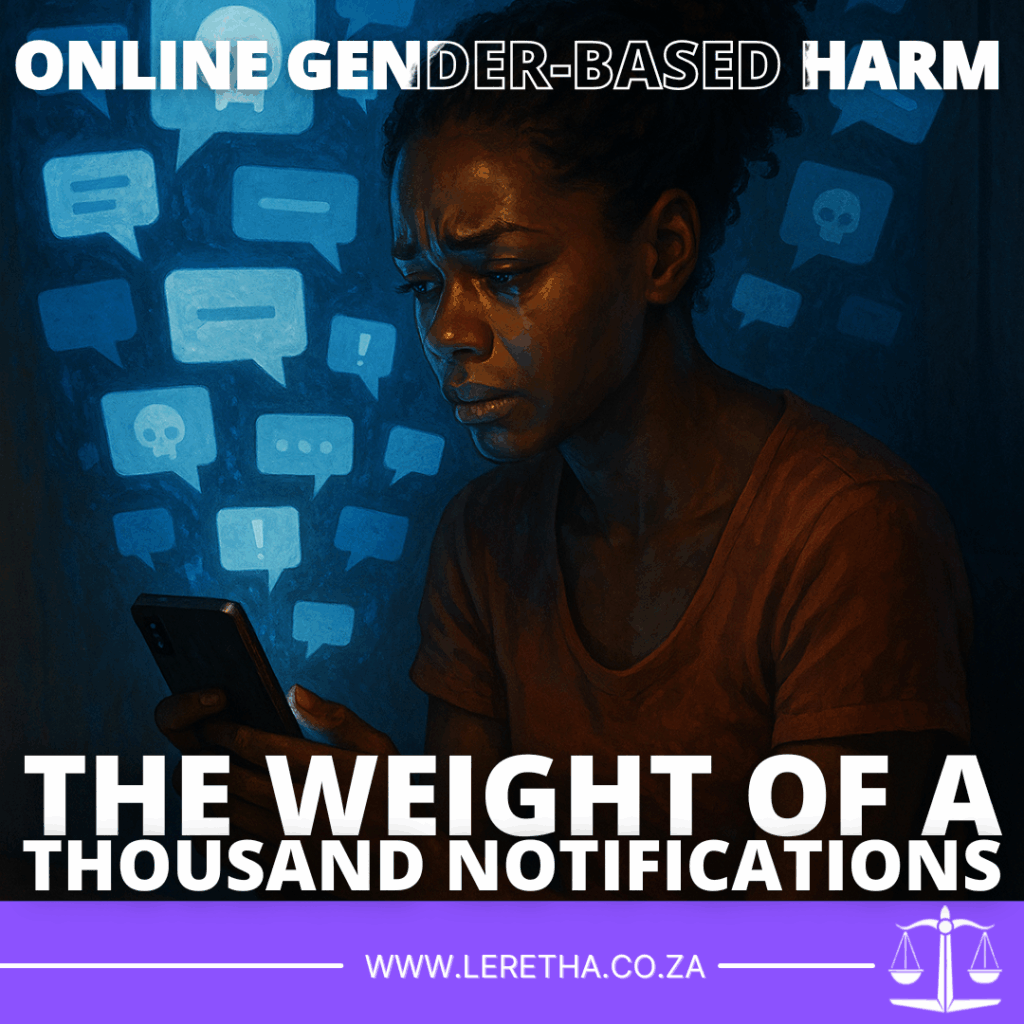
African lawmakers are beginning to recognise the scale of this danger, yet recognition is not the same as protection. This article charts the legal terrain in South Africa and other African jurisdictions and confronts the gaps with a clear, survivor-centred lens on what must urgently change.
South Africa took an important step with the Cybercrimes Act 2020, which criminalises the unlawful sharing of intimate images without consent. For the first time, survivors have a specific statutory offence instead of relying on indirect civil remedies or general harassment provisions.
Across Africa, bodies such as the African Commission on Human and Peoples Rights have acknowledged technology facilitated gender based violence as a growing human rights threat and urged states to introduce protective frameworks. Kenya, Nigeria, Uganda and others have adopted cybercrime or computer misuse laws addressing online harassment, cyberstalking, identity misuse and image-based abuse.
Yet the result is a fragmented patchwork. Protection varies widely, leaving many survivors unprotected, unspoken for or retraumatised by the very systems meant to support them.
Internationally, there is consensus that digital violence must be understood within the broader continuum of gender based violence. It is not a separate inconvenience. It is a direct attack on autonomy and equality.
Criminalising non-consensual image distribution and related harms validates survivors’ experiences. Naming the abuse gives authorities a clearer mandate and offers survivors a formal route to seek justice.
Where no single law captures the full range of digital abuse, countries combine statutes dealing with harassment, extortion, unlawful access and identity fraud. This recognises that digital violence is rarely linear and often involves multiple overlapping harms.
The impact of digital violence is devastating. Careers collapse after leaked images circulate at work. Teenagers face relentless harassment that pushes them toward self-harm. Women activists and journalists endure coordinated attacks that include manipulated images and threats of sexual violence.
The trauma does not end when a post is removed. Copies resurface. Screenshots reappear. The fear becomes chronic. Survivors alter how they move, speak, work and interact online and offline. Digital violence reshapes their world.
Laws mean little if they do not safeguard lived experience. Digital violence is not a glitch in the system; it is a direct assault on dignity, autonomy and equality. Screens should not become weapons, and women should not be left to navigate unsafe digital environments alone.
Justice must be measured in more than arrests. It must be felt in how quickly a survivor can reclaim her agency, restore her sense of safety and return to the world without fear or shame.
Until that becomes the norm across Africa, the promise of digital justice remains unfulfilled.
Newsletter Disclaimer: The views, opinions, and legal interpretations expressed herein are subject to change, as they may be influenced by new developments, amendments to the law, or judicial interpretations. While every effort is made to ensure the accuracy and relevance of the content at the time of publication, readers are advised to seek personalised legal counsel to address their specific circumstances.