
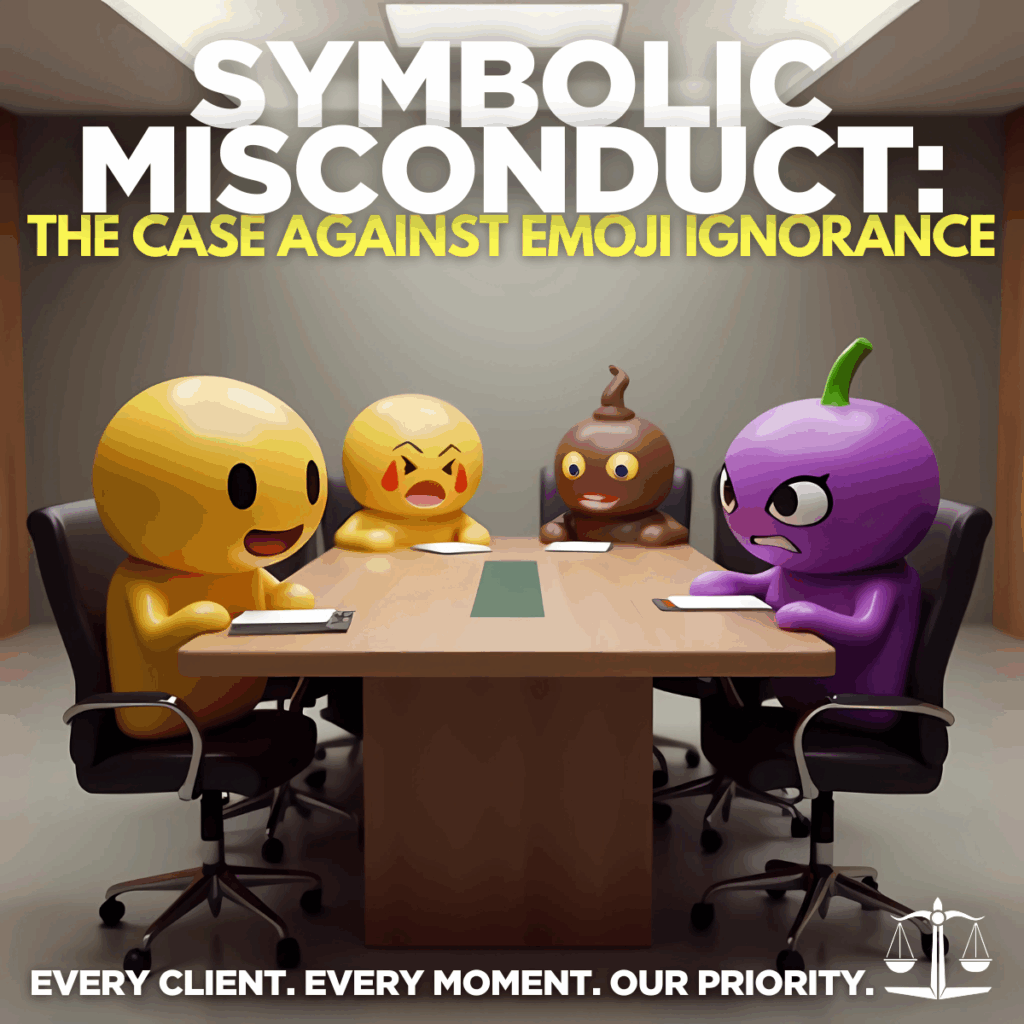
In an age where “thumbs up” can mean “deal accepted” and an eye-roll can escalate into a formal grievance, South African employers can no longer afford to ignore the legal significance of digital tone.
Today, workplace communication doesn’t happen at the boardroom table—it happens on Teams, Slack, WhatsApp, and email. These platforms aren’t just tools—they’re legal environments.
Every emoji, every GIF, every informal sign-off is potentially evidentiary.
Recent South African tribunal and quasi-judicial forum decisions have affirmed what forward-thinking legal practitioners have long cautioned: digital tone carries legal consequence. In a landmark case heard before the Commission for Conciliation, Mediation and Arbitration in 2023, a harassment finding included the use of emojis as aggravating conduct. In the words of the presiding commissioner, “The respondent’s use of symbols created a sustained atmosphere of discomfort and perceived ridicule.”
Judicial Officers and Arbitrators are now interpreting visual symbols as part of the “totality of conduct” under review. But most companies remain dangerously unprepared.
- Employment Equity Act 55 of 1998: Symbols perceived as offensive, exclusionary, or culturally insensitive may constitute unfair discrimination.
- Cybercrimes Act 19 of 2020: Digital harassment or threats, even in symbolic form, are criminally prosecutable.
- Protection of Personal Information Act 4 of 2013: Your company must protect employee data and ensure digital communication does not inadvertently reveal or misuse personal identifiers (including religious symbols, cultural affiliations, etc.).
- Companies Act 71 of 2008: Directors and officers have fiduciary duties to act with care, skill, and diligence. Inappropriate or misleading emoji use in official correspondence could lead to negligence or misrepresentation, exposing companies to reputational and legal risk.
What’s missing from most companies, government entities and Parastatals? A governance framework that regulates tone, context, and symbolic language
While the private sector may be slower to implement emoji and digital tone policies, public sector institutions face a unique and urgent obligation to act.
Government departments, municipalities, and state-owned entities operate under heightened transparency requirements, constitutional obligations, and the expectation of impartiality and public accountability.
In a recent Commission for Conciliation, Mediation and Arbitration (CCMA) disciplinary proceeding involving state employees, the use of emojis in official WhatsApp groups and internal communications has been cited as unprofessional conduct. In one instance, a departmental official used fire and flexed-arm emojis in response to a post about a violent service delivery protest, prompting a formal complaint and an investigation under the Code of Conduct for Public Servants.
The risk is twofold:
- Public Scrutiny and Media Sensationalism
Any tone-related digital misstep by a government official can quickly escalate into a national headline, especially when emotive or politically charged emojis are involved. These symbols, while informal, become part of the public record and are increasingly used in disciplinary files, grievance logs, and PAIA (Promotion of Access to Information Act 2 of 2000) requests.
- Constitutional and Legislative Exposure
- Under Section 195 of the Constitution, public administration must be “development-oriented” and uphold a high standard of professional ethics.
- The Public Service Regulations demand fair, unbiased, and respectful communication in all official duties.
Moreover, procurement teams and political appointees are increasingly communicating via WhatsApp and email, making digital tone a legal and political risk. A misinterpreted emoji in a procurement thread could be construed as flippant, inappropriate, or worse, as suggestive of partiality or misconduct.
SOEs must also consider contractual integrity with international investors and development finance institutions. A poorly handled emoji-related incident could undermine project trust, trigger compliance reviews, or even endanger funding.
At Leretha Legal, we strongly advise all state organs and public entities to adopt a Digital Professionalism Charter, one that covers tone, symbolic language, emojis, visual cues, and informal digital habits across all departments and ranks.
In a constitutional democracy, professional conduct doesn’t end with what you say; it includes what you symbolise.
Beyond the Gavel: The Real-World Fallout
- A Johannesburg tech firm faced internal backlash after an employee reacted with a laughing emoji in a serious team-wide email addressing mental health. A complaint was filed; trust was broken.
- An international client cancelled a multimillion-rand deal when a junior staff member included a culturally offensive symbol in a presentation.
- An Eastern Cape-based agency dismissed two employees following inappropriate emoji use in a WhatsApp group tied to gender-based jokes; an incident that cost the company a key client and reputational standing.
These examples illustrate a truth few leaders want to confront: tone without policy is a compliance risk.
.
We’ve expanded the checklist beyond the obvious to encourage deep operational reflection:
- Do our policies define professionalism beyond just language; do they address visual tone and emoji use?
- Have we trained our team on how different generations and cultural groups interpret common emojis?
- Would our HR team know what to do if a client lodged a formal complaint about the tone of our team’s WhatsApp messages?
- How do we reconcile a remote workforce’s preference for informal communication with our legal obligations?
- Are we currently storing or monitoring employee digital communications? If so, is that aligned with POPIA?
- Do employees understand that workplace messages sent after hours or in personal group chats may still be governed by workplace policies?
- Are we confident that our social media community managers and marketers aren’t inadvertently using emojis that carry unintended or culturally offensive meaning?
- How many platforms are our staff communicating on? Are all covered by our internal policy?
- Have we ever run a digital audit of tone across our internal communications? If not, why not?
Companies that integrate visual tone governance, including emoji policy, report significantly stronger internal communication culture, fewer misunderstandings, and higher client satisfaction. A survey by HR Future (2024) indicated that organisations with digital tone frameworks in place experienced:
- 61% fewer formal grievances linked to internal communication.
- 44% reduction in tone-related client complaints.
- 50% higher satisfaction among remote workers who reported clearer boundaries and expectations.
We urge our clients, public and private, to future-proof their compliance with a Digital Communications Governance Framework. This includes:
- A bespoke Emoji Use Policy.
- Cross-cultural and inter-generational tone training.
- POPIA-aligned communication monitoring protocols.
- Clear disciplinary guidance for tone-based misconduct.
- Internal communications audits across digital platforms.
In legal terms, intent is not always required for liability; impact is what matters. If your employee sends a message with a wink, a thumbs up, or a laughing face and that message is reasonably interpreted as inappropriate, your organisation is accountable.
So, the question is not “Do we need an emoji policy?”
It’s “How much longer can we afford not to have one?”
.
Newsletter Disclaimer:
The views, opinions, and legal interpretations expressed herein are subject to change, as they may be influenced by new developments, amendments to the law, or judicial interpretations. While every effort is made to ensure the accuracy and relevance of the content at the time of publication, readers are advised to seek personalised legal counsel to address their specific circumstances.